

12 Stunning Pilgrimage Sites in France
Last Updated on: 15th March 2025, 06:11 pm
A Pilgrimage to France is a must-do for Christians interested in the history of their faith. France is home to some of the world’s most beautiful cathedrals, monasteries, and shrines. A Catholic pilgrimage to France allows the pilgrim to visit a huge variety of sites with spiritual meaning from antiquity through to those with connection to quite modern Saints.
The Best Pilgrimage Sites in France
France is home to more than 100 cathedrals and large abbeys. While perhaps the most famous churches in France are the churches of Paris – there are many more!
Pilgrimage sites in France are all over the country, with many in Paris – which is a great place to stay in France to start your pilgrimage, but most of France’s pilgrimage sites rise out of France’s glorious countryside. From the West coast in Normandy, to the South of France filled with Lavender fields, these French pilgrimage sites provide both natural beauty and architectural beauty, not to mention spiritual insight to all travelers. When you plan your pilgrimage to France, take stock of these diverse, spiritually powerful, and beautiful pilgrimage sites in France!
Where to Stay for Pilgrimage Sites in France
Most pilgrimages to France will start in Paris, which has so many beautiful (and affordable) hotel options! A few of the sites below are accessible as a day-trip to Paris, but most will require seperate accomodation. For each pilgrimage site I’ll suggest a well-reviewed hotel or one I’ve personally stayed in. A few of these sites may even have a local monastery that you can stay in if that’s of interest (often best for single women or men traveling alone, but occassionally good for couples.)
✈︎ Do not forget to purchase comprehensive travel insurance before you leave for your Pilgrimage to France! France is a safe country but an unexpected accident can ruin your trip and you don’t want it to ruin you financially, too. Always travel fully insured in case of any problems (and to get reimbursed for any expenses for delays and cancellations – something I use often!) I use SafetyWing Travel Insurance and have always been very happy with their service and pricing!

Lourdes
Recommended accomodation: Hotel Eliseo is located less than 100m from the main pilgrim area in Lourdes and the Grotto. It’s well rated and a great price. For something a bit less expensive, Hotel du Commerce et du Navarre is a great choice for pilgrims, serving breakfast each day.
France’s famous shrine, perhaps the greatest and most popular of all pilgrimage sites in France, is Lourdes. Reputed as a place of healing and wholeness, pilgrims flock to Lourdes each year to touch and even bathe in its waters and find solace.
In 1858 a peasant girl named Bernadette saw a vision of the Virgin Mary at Lourdes. In the vision she was told that a spring would appear and in it people would be healed.
Today the original spring is still flowing and water from Lourdes is considered extremely sacred and wonderful for all who need healing. Alongside the original grotto where Saint Bernadette saw her vision is the Basilica and facilities for pilgrims to take baths in the holy spring water. Spring water is an important souvenir at Lourdes, and is available for you to purchase in large and small amounts – even inside Rosary beads.
Lourdes lies in the South of France, near the border with Spain. The countryside is beautiful and any trip to Lourdes, no matter your religion or spiritual background, is a beautiful one and sure to inspire reflection. No pilgrimage to France should miss it. Each day at the shrine is a procession to honor Saint Bernadette and her vision and at 9 p.m. a torchlight procession lights up the entire shrine.

Mont St. Odile
Contribute by Mark Wyld of Wyld Family Travel
Nestled high in the hills of the Vosges mountains, not far from Strasbourg in the Alsace region of France is Mont Sainte-Odile, one of France’s best pilgrimage sites.
It’s a beautiful but solitary place as you wind your way through trees and dark forests to reach Mont Sainte Odile. Set in an awe-inspiring location, perched on a sheer cliff face. Just the sort of place for a saint to be buried.
Odile was blind but regained her eyesight after SaintErhard of Regensburg baptized her, thus bringing her eyesight back. Her father Adalrich, the Duke of Alsace tried to marry her off and Odile escaped into the mountains being chased by her father. A cliff face opened up to protect her and her father then agreed to build her monastery in this position.
This beautiful pilgrimage site in France was originally built sometime in the early 7th century, but has been destroyed and rebuilt many times over the years. Visit the tomb of St Odile, the Chapel of Tears and the Chapel of Angels. A walk along the cliff face provides inspiring views looking north towards Strasbourg and south towards Colmar. Today there is a Church, chapels, hotels, cafe and gift shop for pilgrims and visitors alike. Mont Sainte Odile is one of the most beautiful spots in all of the Alsace to visit.

Rocomador
Submitted by Pierre from French Moments
There are a number of popular pilgrimage sites in the Southwest of France that are crossed by the St. James’ Way pilgrimage to Santiago de Compostela.
Rocamadour is one of them. Situated in the old province of Quercy, the village of Rocamadour is arguably one of the most impressive pilgrimage sites in France and perhaps one of the best pilgrimage sites in Europe! Rocamadour is a fantastic Citadel of Faith clung precariously against the cliff above the Alzou valley.
Already in the 12th century, 30,000 pilgrims came to Rocamadour on days of atonement to pay tribute to the Black Virgin, including the kings of France and England.
You can start the visit from l’Hospitalet, founded in the 11th century. This is where pilgrims on their way to Santiago de Compostela were offered assistance. Walk down along the “Sacred Way” (Voie Sainte) towards the medieval site of Rocamadour.
You will discover the old picturesque village by passing through the Fig Tree and Salmon Gates. From the village centre, the Great Staircase (l’Escalier des Pèlerins) leads to the shrine of Rocamadour. Pilgrims used to climb its 216 steps on their knees in penance.
The actual shrine comprises of eight sanctuaries: one church (a Basilica), six chapels, and a crypt. Don’t miss visiting the Saint-Sauveur Basilica, Rocamadour’s largest sanctuary which dates back to the 13th century.
The final stage of the pilgrimage is the Notre-Dame chapel which contains the shrine’s most valuable item: the Black Virgin of Rocamadour. The Romanesque statue in walnut wood has been revered by pilgrims since the 12th century.
You can end your visit to Rocamadour by climbing to the castle at the very top of the cliff. From there you’ll enjoy a fine view over the roofs of the village and the Alzou canyon before you continue on with your pilgrimage to France.


Saint-Jean-Pied-de-Port
Submitted by Alya Campbell of the Stingy Nomads
A small town of Saint-Jean-Pied-de-Port in the south of France for the last 10 centuries has been an important place for European pilgrims on their way to Santiago de Compostela. Thousands of pilgrims come here every year to start their pilgrimage following one of the to this pilgrimage site in France, along one of the most popular pilgrimage routes in the world the French Camino of St.James.
In fact, Saint-Jean-Pied-de-Port is a meeting point of two pilgrimage routes: the Via Podiensis and the Camino de Santiago. The first route starts in Le Puy and finishes in St.Jean, the second route starts in St.Jean and finishes in Santiago de Compostela, Spain. Due to its proximity to the pass over the Pyrenees Saint-Jean-Pied-de-Port became a gateway for pilgrims walking from different parts of Europe to Spain. It’s the last stop on their way over the mountains.
The pilgrimage from St.Jean can be done by anybody there are no rules or requirements. It’s not compulsory to complete the entire route you can walk just as far and as long as you want. The way from Saint-Jean-Pied-de-Port to Santiago de Compostela is marked with traditional yellow arrows and shells. A visit to St.Jean will be interesting even if you’re not planning to do the pilgrimage. The Camino spirit and special atmosphere might inspire you to do it in the future.
There is a regular train service from Biarritz to Saint-Jean-Pied-de-Port, the journey takes 1 hour.

Basilique Notre-Dame de Fourvière
Explored by Phil from JOURNICATION travel blog
One of the most striking landmarks in Lyon is without question the Fourvière Hill with its magnificent basilica. The tall sacred building can be seen from afar, which has been enthroning the old quarter of Vieux Lyon since 1872. Especially if you only have one day in Lyon, a trip up the hill is an absolute must. The basilica at Fourvière is one of the best France pilgrimage sites.
You can either go up the stairs or take the funicular, a train connected to the city’s metro.
Particularly worth seeing for visitors is the Basilique Notre-Dame, which, along with other historical sights of the city, is a UNESCO World Heritage Site.
The Roman Catholic pilgrimage church was built near the old chapel in the center of Roman Lugdunum. The magnificent furnishings with countless mosaics, figures of saints and huge stained glass windows are remarkable.
In addition to the basilica, there are many other churches, chapels and religious sights on the “praying hill” of Fourvière.
The view over Lyon from the viewpoint is unbeatable, you can see far beyond Vieux Lyon, the island between the Saône and Rhone rivers and the Part-Dieu business district. In good weather you can even see as far as the Alps – including the mighty Montblanc, the highest mountain in Europe.
Another tip: the viewing platform is still open in the evening and the view over the illuminated Lyon is simply outstanding!

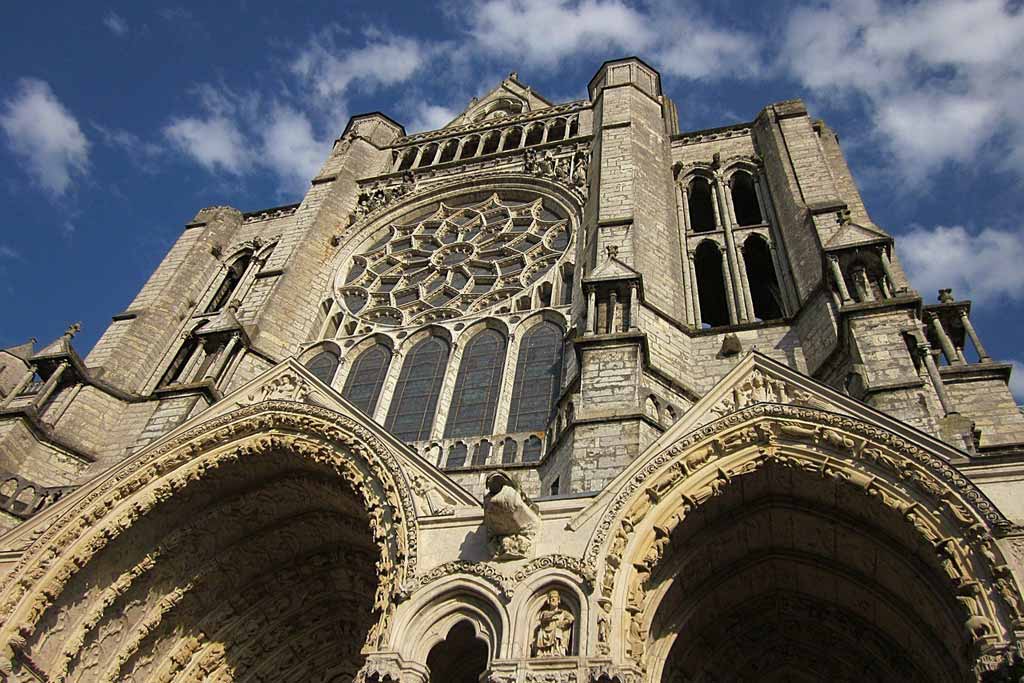
Chartres Cathedral
Contributed by Norbert from France Bucket List
Chartres is a beautiful town located in central France, not far from the best Loire Valley Castles. Chartres is one of the best-known pilgrimage sites in France. Chartres is 80 km southwest of Paris, very easy to reach from the French capital by train on a day trip. However, I recommend spending more time in the area – perhaps on a road trip – also visiting some of the most beautiful Loire Castles.
Chartres is home to a beautiful 13th-century Gothic cathedral dedicated to the Virgin Mary. This is one of the Grandes Cathédrales in France and a major pilgrimage site in the country. Every year, there’s a popular pilgrimage from Notre Dame of Paris to Notre Dame of Chartres that attracts thousands of pilgrims from all around the world.
The Cathedral of Chartres hosts a beautiful labyrinth carved on the pavement. Most of the time this labyrinth is covered by the chairs inside the cathedral but on Fridays, the chairs and other furniture are moved apart and pilgrims can step into the labyrinth and walk through it whilst praying. This is definitely a special moment, that’s why we always recommend visiting Chartres on Friday if you can.
Apart from the impressive Cathedral, Chartres is a lovely place to visit, with some beautiful medieval architecture, narrow cobbled streets and a picturesque area crossed by little canals.

Abbey Notre-Dame de Senanque
Contributed by Nadine of Le Long Weekend
Senanque Abbey is one of the most famous historical sites in Provence and a must-see pilgrimage site in France. Located very near the beautiful hilltop village of Gorges, it’s tucked away in a peaceful valley in the heart of the Luberon.
Founded in the 11th century, the Cistercian Abbey was first established by monks from the monastery of Mazan, in nearby Ardèche. Today it is still inhabited by monks, who gather to pray in the abbey church seven times a day. In between prayers, the monks silently and dutifully care for the lavender, beehives and olive trees that surround the abbey. The fruits of their labour are turned into delicious honey, olive oil and lavender products that are sold in the abbey gift store.
The public can experience the magic of this sacred site in many ways. You can simply come to enjoy the gardens and view some of the most famous lavender fields of the Luberon, visit the gift store, and admire the abbey’s exterior, or you can take a tour of the interior. Unfortunately guided tours are only available in French, but Histopads are available in several languages so you can take a self-guided tour and discover what life would have been like at the abbey in the summer of 1230.
For those looking for a spiritual retreat, it is possible to stay at the abbey and immerse yourself in the daily life of prayer, silence and contemplation.
[A note from Cate: I stayed at Senanque Abbey for a spiritual retreat in 2012. It was one of the best retreats I’ve made – and one of the few where retreatants were encouraged to go to prayer at 4 am with the monks. There was something incredibly meaningful and magical about being in a Romanesque abbey church at 4 in the morning, with the most amazing acoustics to take in the monks’ singing.]

Conques
Contributed by Pauline of BeeLovedCity
When it comes to pilgrimage sites in France, Conques sets the bar! This small village, lost in the countryside, is one of the most important stops on the route to Santiago de Compostela. Thousands of pilgrims stop by every year and rightly so! Not only is the village itself beautiful but it’s also home to one of the most sacred sites in South West France.
The romanesque Abbey of Sainte-Foy features an incredibly beautiful facade. The tympanum above the door is a true masterpiece! Scenes of the bible were carved by hand! They are amazingly detailed and well-preserved. It’s been an UNESCO World heritage site since 1998.
You can also visit the Sanctuary of Sainte Foy and discover the other treasures in the abbey. One of the most famous is the “A” of Charlemagne.
Although the inside of the abbey is gorgeous, make sure to also walk around and visit the cloister for the full experience.
If you’d like to know more about the history of Conques and why it became such an important pilgrimage site, make sure to stop by the tourist centre. They organise guided tours and will be more than happy to give you more information.
The rest of the village is also worth visiting. Conques is full of beautiful medieval houses. There are loads of shops selling local products and a few restaurants. If you’d like to try the local dishes such as duck confit or foie gras, it’s a great place to do so.

Basilica of Sacré-Cœur
Contributed by Rai of A Rai of Light
The Basilica of the Sacré-Cœur, also affectionately called the Sacred Heart of Paris, is a Roman Catholic Church dedicated to the heart of Jesus. This minor basilica, located in the 18th arrondissement of the Montmartre neighbourhood, has a long and complex history as both a religious as well as a political monument, existing since pagan times through the Middle Ages and the French Revolution. A staple of the Parisian skyline and one of the most-visited pilgrimage sites in France the Basilica of the Sacré-Coeur should be on all pilgrim’s bucket lists. The Basilica of Sacré-Coeur is most certainly one of the best churches in Paris…if not all of France!
This area in which the late-nineteenth century basilica is found is a historic pilgrimage site. Under the rule of Saint Genevieve, the city became a major Christian pilgrimage site and a chapel was built in Montmartre in honor of Saint Denis. It is open all year-round, with free entry to all. Mass takes place every day of the week with the 3 pm Friday mass followed by a period of adulation and a Way of the Cross prayer.
There are both daytime and nighttime pilgrimage options. The daytime pilgrimage starts at 10 am with a talk, followed by mass, sext, and a sanctuary time of prayer before the Blessed Sacrament while the nighttime pilgrimage starts at 8:30 pm finishing at 8 am the following day.

Brantôme Abbey
Hannah from Nouvelle Aquitaine Travel
Deep in the lush Dordogne area of south-west France, on the pilgrimage route to Santiago de Compostela, lies the village of Brantôme. The centrepiece to this idyllic river town is the Abbey of Saint-Pierre and the Troglodyte Caves, which monks once occupied. This pilgrimage site in France is a wonderful stop for pilgrims along the Camino and worth visiting of its own accord.
It is believed that the abbey was founded by Charlemagne in 769AD. Charlemagne, or Charles the Great, was King of the Franks and united much of Western Europe during his reign. After his visit to Brantôme, the abbey was built around the caves.
The sacred relics donated by Charlemagne have brought pilgrims to this site for hundreds of years – and are still on display in the cloister. Into the hillside behind the abbey is the Grotto of Brantôme, the walls are covered in a beautiful bas-relief depicting the Last Judgement. The other point of historical significance is the gorgeous Romanesque bell tower, built in the 11th century, it is said to be one of the oldest in France.
There are two tours on offer at the Abbey in Brantôme – the caves and museum on one ticket, and the cloister, church and bell tower on the other. Or you can combine the two and receive a discount. You will need 2 hours to see both parts of this incredible site.


Mont St. Michel
Contributed by Elisa from World in Paris
Mont St Michel is one of the most important pilgrimage sites in France since medieval times and also one of the top tourist attractions in the country. Its beauty and religious importance make it one of the best day trips from Paris by train + bus or guided tour but we recommend spending at least a night on-site for the full experience.
Mont St Michel is located on a rocky island at the mouth of the Couesnon River, in Normandy Western France.
The Abbey of Mont St Michel is dedicated to the archangel St Michel, who crowns the religious building eternally fighting against the devil. There was a chapel dedicated to the archangel since the 8th century which replaced an ancient pagan construction. Over the centuries, that little chapel evolved into the beautiful Gothic construction that we can see today. Due to its setting, on a rocky island, this is not a standard Gothic building, but a construction adapted to its particular topography. The result is wonderful.
Mont St Michel is inhabited by a small community of monks and nuns who meet four times a day to recite the liturgical office in the abbey itself (or in the crypt in winter). Pilgrims can participate in these prayers and for many, this is the highlight of the pilgrimage.
The area of St Michel is well known for its high tides, the highest in Europe which isolates the abbey from the mainland for a few hours and gives the place a picturesque setting.

Lisieux
Lisieux is the second most popular pilgrimage site in France. A pilgrimage to Lisieux is a truly special opportunity to remember that the “little things” we do add up to a life of faithfulness.
Lisieux is made famous by St. Therese of Lisieux, a nun who lived for only 24 years in the late 1800’s but whose life has had a rippling impact. Saint Therese entered the convent after a profound conversion and healing experience at age 15 and throughout her life as a religious sister wrote about her desire to follow Jesus in “the little way” — doing small things, always with love, for God’s glory. After her death at a young age from Tuberculosis, one of her sisters gathered her writing into what is now a famous book, “The Story of a Soul.”
In 1925, the Pope canonized Saint Therese, and in 1997 she was declared a Doctor of the Church. In Lisieux, a grand basilica that can hold up to 3000 pilgrims was erected. It is one of the most beautifully painted churches in all of France and is not to be missed on your pilgrimage to France.
This post may contain affiliate links. That means I earn a small commission for products or services mentioned on this site. As always, all opinions remain my own. For more information please see our Privacy Policy.


