

The 14 Most Beautiful Churches & Famous Cathedrals in Spain (2024)
Last Updated on: 14th May 2024, 11:45 am
Spain has some of the world’s most beautiful Cathedrals – and certainly some of the biggest! For centuries, Spain was one of the strongholds of the Roman Catholic Church. During these years, the construction of grander and grander cathedrals in Spain was a way to demonstrate faith, power, and – of course – wealth! Today we can still visit these remarkable cathedrals, dotted all over Spain, and marvel at their beauty and spiritual power.
Spain experienced significant economic and political power during particular periods of its history, including during the Recognquista or the Christian “reconquest” of the Iberian Peninsula from the Moors – and the so-called Spanish Golden Age in the 16th and 17th century. During these periods the peopel of Spain demonstrated their newfound wealth into massive building projects – including Spain’s magnificent cathedrals that still stand today.
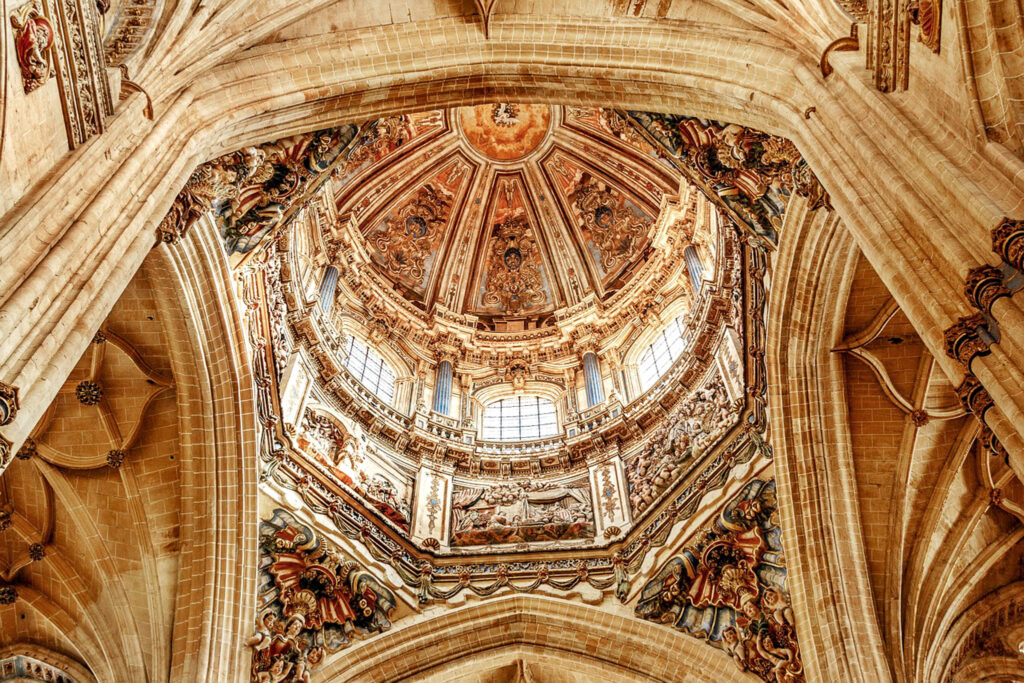
The famous cathedrals in Spain are known today for remarkable architectural diversity: you can find some of the best examples in the world of Gothic, Romanesque, Renaissance, and Baroque cathedrals in Spain. You can also find one of the most important newly built (or under-construction) cathedrals in the world: Antoní Gaudí’s unfinished Sagrada Familia in Barcelona. Spain’s cathedrals are also huge – many of them are the biggest I’ve seen in my life (and some are the biggest in the world – like the Sevilla Cathedral!).
The cathedrals in Spain are also prime pilgrimage sites – most notably the Cathedral of Santiago de Compostela which attracts thousands of religious pilgrims who walk across northern spain to arrive in the cathedral on their knees.
Below you will find the most famous cathedrals in Spain, from all over the country – in mountains and on islands – and discover the religious richness and architectural beauty of Spain’s churches and cathedrals.
Planning a Last-Minute Trip to Spain? We’ve Got You Covered!
🏨 Accomodation in Spain’s Top Cities
Madrid – Search Madrid Hotels here
✈︎ The Principal Madrid (Luxury, eco-friendly and very central.) $$$
Barcelona – Search Barcelona Hotels here
✈︎ Hotel Duquesa de Cardona (Affordable right in the Gothic Quarter, walk to Las Ramblers) $$
Santiago Compostela – Search Santiago Hotels here
✈︎ San Francisco Hotel Monumento (Gorgeous, affordable, historic hotel in city center) $$
🛵Best Activities and Tours in Ghent
✈︎ Tour Avila & Segovia from Madrid (Two incredible cathedrals and places of spiritual importance!)
✈︎ Ticket and Audio-Guide to the Sagrada Familia (You must buy tickets ahead of time – this is a great option!)
✈︎ Tour of Cathedral of Santiago de Compostela (A guided tour of the cathedral, museum, and old town)
💶 Travel Insurance
✈︎ Do not forget to purchase comprehensive travel insurance before you leave for Spain! I use SafetyWing Travel Insurance and have always been very happy with their service and pricing!
The Most Famous Cathedrals in Spain
For Cathedrals in Barcelona: Read Here

1. The Cathedral of Santiago Compostela
The Cathedral of Santiago Compostela may be the most famous cathedral in Spain as it is the terminating point for the most important pilgrimage in Europe: the Camino or “The Way.”
The cathedral of Santiago Compostela itself is an architectural marvel – a masterpiece of Romanesque architecture, with later Gothis and Baroque additions. It is deeply elaborate, and it’s façade, called the Pórtico de la Gloria, is worth taking time to simply stand and contemplate with all its intricacy.
Believed to house the remains of one of the most important apostles of Jesus Christ, Saint James the Greater, Santiago Compostela has been an important site for pilgrims for many centuries. As such it was declared a UNESCO World Heritage site, along with the old town surrounding it, in 1985 and 1993 respectively.
You should absolutely take time to go inside Santiago Compostela cathedral and enjoy its artistic treasures, including the “Botafumeiro” or giant incense burner used still today during certain religious ceremonies. The altar and reliquary of Saint James is perhaps it’s most important treasure, but don’t miss the Chapel of the Savior and the Tom of King Ferdinand II of León. The Cathedral Museum houses many of the cathedral of Santiago Compostela’s religious art and treasures and shouldn’t be missed!
2. Valencia Cathedral
Recommended by PlaceofJuma
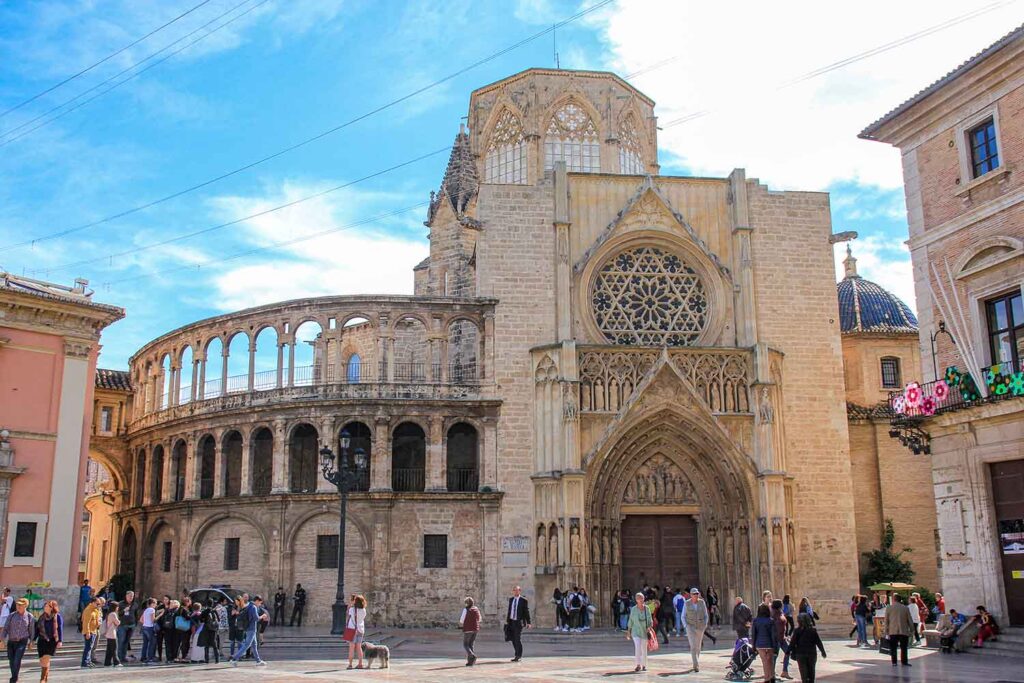
The Cathedral of Valencia, also known as the Catedral de Santa María de Valencia, is definitely one of the most beautiful cathedrals in Spain. It is located in the enchanting Plaza de la Virgen, a charming square with lovely cafés and restaurants, and a visit to this place of worship is one of the best things to do in Valencia.
It is a true masterpiece of Gothic and Romanesque architecture, and due to its beauty also one of the city’s most famous landmarks. The Valencia cathedral dates back to the 13th century and has been renovated and extended several times over the last hundred years. A real highlight is the 51-meter-high bell tower “El Micalet” from the 14th century from which you can enjoy a magnificent view of Valencia.
Valencia Cathedral is most famous because it is believed to house the Holy Grail. Many believe that it is the very chalice that Jesus used during the Last Supper, making Valencia Cathedral a place of great religious significance and one of the most famous cathedrals in Spain. The Holy Grail attracts pilgrims and tourists alike and contributes to the cathedral’s fame. The interior of Valencia Cathedral is adorned with exquisite frescoes, sculptures and chapels, reflecting the talent of artists from different centuries.
3. Palma Cathedral
Contributed by Bella Falk, Passport & Pixels
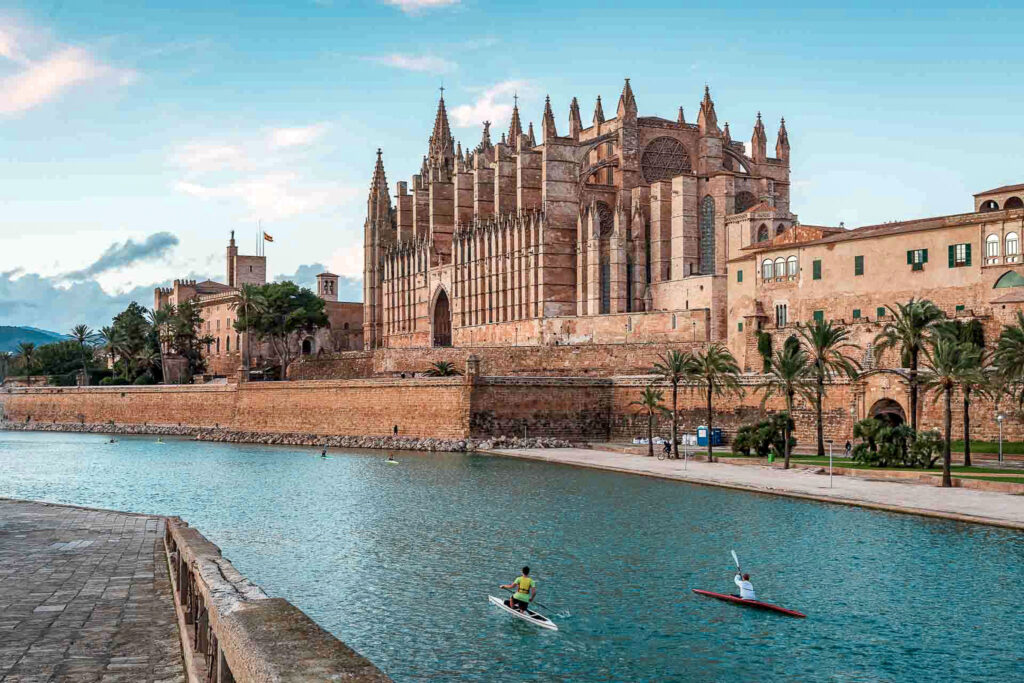
Without a doubt the Cathedral of Santa Maria of Palma, usually referred to as Palma Cathedral or ‘La Seu’, is the city’s most magnficent landmark. As you arrive into Palma de Mallorca for the first time you’ll immediately see it dominating the skyline with its jagged turrets, and for most people it’s impossible not to come home with hundreds of photos of it from every angle.
Palma cathedral’s construction began in the 13th century under King James I of Aragon, but it ended up taking over 300 years to complete. A stunning example of Catalan Gothic architecture, one of its highlights are the 61 stained glass windows, the most famous of which, the central rose window, casts a glorious rainbow of colours across the interior on a sunny day.
It’s absolutely worth paying the 10 Euro entrance fee to check out the cathedral’s most iconic features, including “La Portalada” or the main portal, which is adorned with biblical scenes and intricate sculptures. Inside, you’ll also be wowed by the sheer scale of the nave, supported by soaring columns and ribbed vaults. The cathedral is also home to some famous works of art, including thought-provoking modern pieces by Antoni Gaudí and Miquel Barceló. The works of art in the interior of the Palma Cathedral is part of what makes it one of the most famous Cathedrals in Spain.
Palma Cathedral stands on the site of a former mosque, a hint at Mallorca’s mixed religious heritage. Next door is another historic site, the Royal Palace of La Almudaina, which offers a glimpse into the island’s royal past. Visitors can explore its opulently-decorated rooms and sunny courtyards with stunning views of the Cathedral and the Mediterranean.
Note that Palma Cathedral is only open from 10 am to 2.15 pm daily, so make sure you don’t try and go in the afternoon like I did – whoops!

4. Mosque-Cathedral of Cordoba
Contributed by Becki from Meet Me In Departures
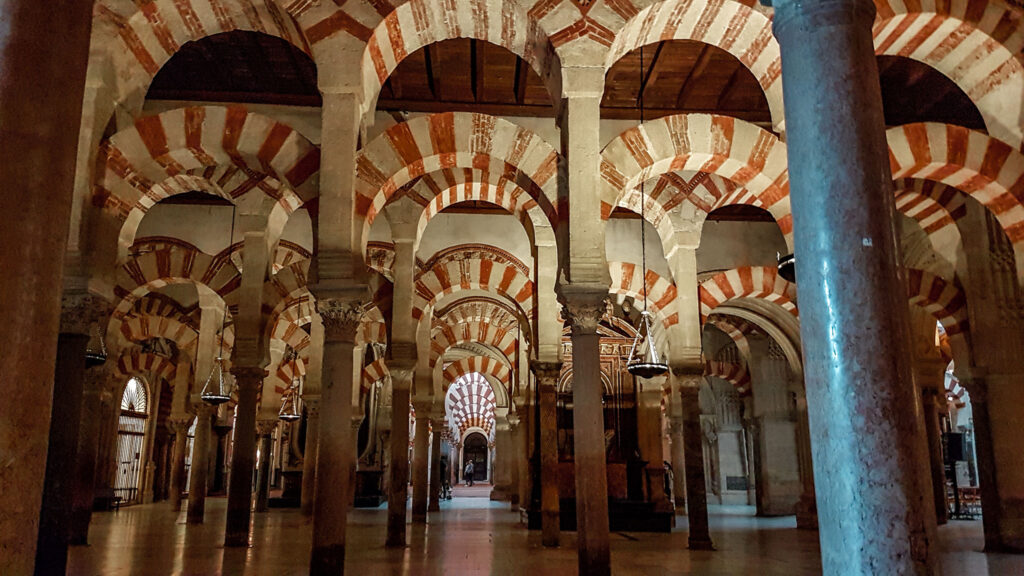
The Mezquita Mosque Cathedral of Cordoba is also known as the Great Mosque of Cordoba. The iconic landmark is one of the oldest structures from the time Moors, an Islamic people-group, ruled Al-Andalus, making it a significant historic monument in the Western Islamic world.
The Mezquita began as an Islamic mosque in the 8th century and was converted into a Christian cathedral in the 13th century. Its architecture is a stunning blend of Moorish and Christian influences, reflecting the cultural dialogue that has shaped its appearance.
One of the most notable features of the Mezquita is its famous horseshoe arches, which were a signature element of Islamic architecture during this period. The double arches create a sense of depth and grandeur within the space. The pink and cream-coloured blocks and complemented with intricate Islamic geometric patterns that adorn the walls, arches and ceilings. In the centre, you can look up at the enormous spire, which dates from when the mosque was converted into a cathedral.
The building was declared a World Heritage Site by UNESCO in 1984, further cementing its status as an invaluable piece of world history.
Other worthy things to see in Cordoba, include the Alcazar and the old Jewish district.
The Alcazar offers old defensive structures and beautiful gardens. The old Jewish district features a myriad of photogenic cobblestoned streets. Don’t miss a walk over the Roman Bridge, with its stunning views of the city, is the perfect way to round off a day of sightseeing.
5. Seville Cathedral
Contributed by Helen of Helen on her Holidays
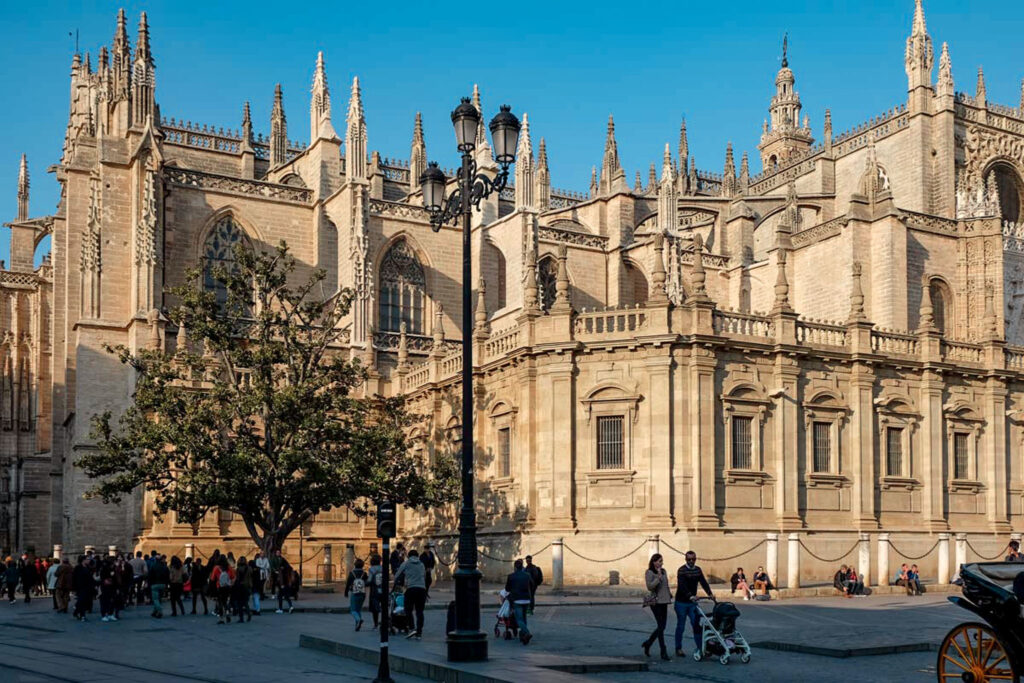
Grandly situated in the middle of Seville’s beautiful historic centre, Seville Cathedral is an awe-inspiring sight. Seville Cathedral is the largest Gothic church in the world as well as the third largest church overall – but it wasn’t always a Christian church. Originally built as a grand mosque in the 12th century, it was converted into the present-day cathedral after the Reconquista when Christians reclaimed the city in the 15th century.
The cathedral still has traces of its origins, most notably in its bell tower. Known as the Giralda, it was originally the mosque’s minaret. Climbing the Giralda is one of the top things to do in Seville for visitors today.
Inside, the cathedral is beautifully ornate, with ribbed ceilings, lavish golden altars, art-embellished chapels and stunning stained glass windows. Don’t miss seeing the tomb of Christopher Columbus and the Patio de los Naranjos, a courtyard filled with orange trees.
Seville is a compact city, and many of the city’s other top attractions are nearby. The beautiful Real Alcázar de Seville complex of palaces and gardens is just across the Plaza del Triunfo and both the Plaza de España and Metropol Parasol are within a 20 minute walk of the cathedral.

6. Almudena Cathedral – Madrid
Contributed by Victoria of Guide Your Travel
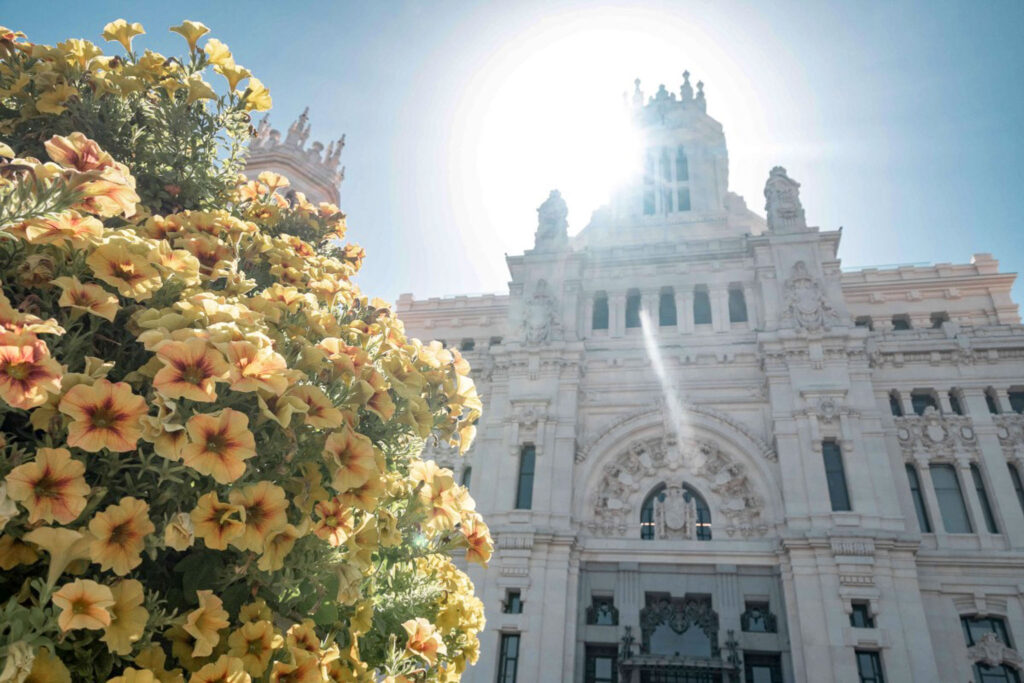
The Almudena Cathedral, standing majestically in the heart of Madrid, is a testament to ancient tradition and modernity. Its history dates back to the 19th century when construction commenced in 1883, but it wasn’t completed until 1993, blending various architectural styles due to its lengthy construction period. This blend includes neo-Gothic, neo-Romanesque, and neo-Classical influences, resulting in a captivating visual fusion making it one of the most famous cathedrals in all of Spain.
The cathedral’s exterior showcases intricate detailing and a stunning façade, while the interior boasts ornate decorations, vibrant stained glass windows, and impressive artwork. Notably, its crypt houses tombs of various Spanish royals, adding historical significance to this religious site.
Upon visiting, I was struck by the grandeur of the cathedral’s design and the palpable sense of history within its walls. The interplay of light through the stained glass and the solemnity of the religious artwork evoke a profound sense of awe and tranquillity.
The Almudena Cathedral is renowned for housing religious relics and sculptures, including the Virgen de la Almudena statue, the patron saint of Madrid. Its fame also stems from being the site of significant events such as royal weddings and religious ceremonies.
Adjacent to the cathedral lies the stunning Royal Palace of Madrid, allowing visitors to explore the opulent residences of Spanish monarchs throughout history. The palace’s exquisite architecture and lavish interiors complement the cathedral visit, providing a comprehensive experience of Madrid’s rich cultural heritage.
The Almudena Cathedral’s unique blend of architectural styles, historical significance, and artistic treasures make it a must-visit landmark, offering a glimpse into Spain’s religious and royal heritage.
7. Burgos Cathedral
Contributed by Nick from The World Overload
Burgos’s main cathedral attraction is the Basilica of Saint Mary of Burgos. What is noticeable about this one is that its architecture is primarily the Gothic style of the 13th century, even though it was not fully completed until the 16th century. Because of this, it has become one of the most renowned landmarks of Spanish architecture and a highlight of Spain. It has even been designated a UNESCO World Heritage Site.
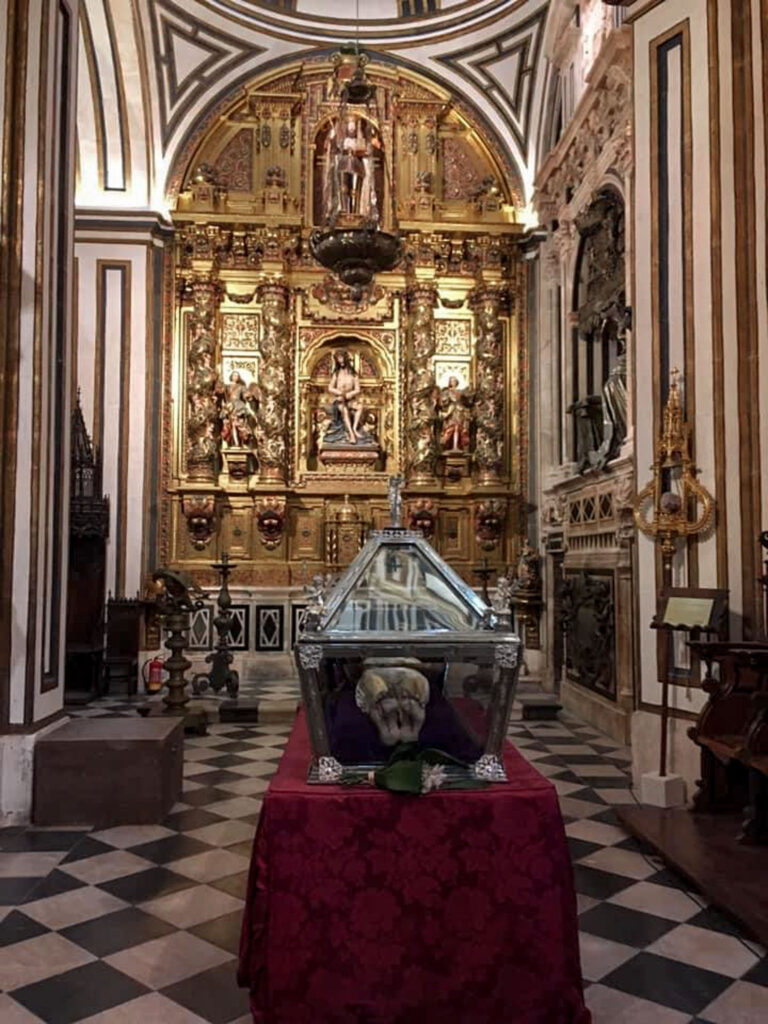
Inside the cathedral, you will find it filled with various remaining works of famous Spanish artists and sculptors, detailed glass-painted windows, and exquisitely carved stalls. It all exhibits the Gothic style of the time, giving it more of a supernatural than religious look especially as there is low light inside the entire building. Below are the tombs of Castille nobility, including the famous El Cid who was a historic and legendary figure in Spanish medieval history.
Located in the historic center of the city, any walking or city tour will take you through here. You have also nearby museums, a monastery, and even a palace that helps to showcase all the rich history, art, and architecture that this city has to offer you.
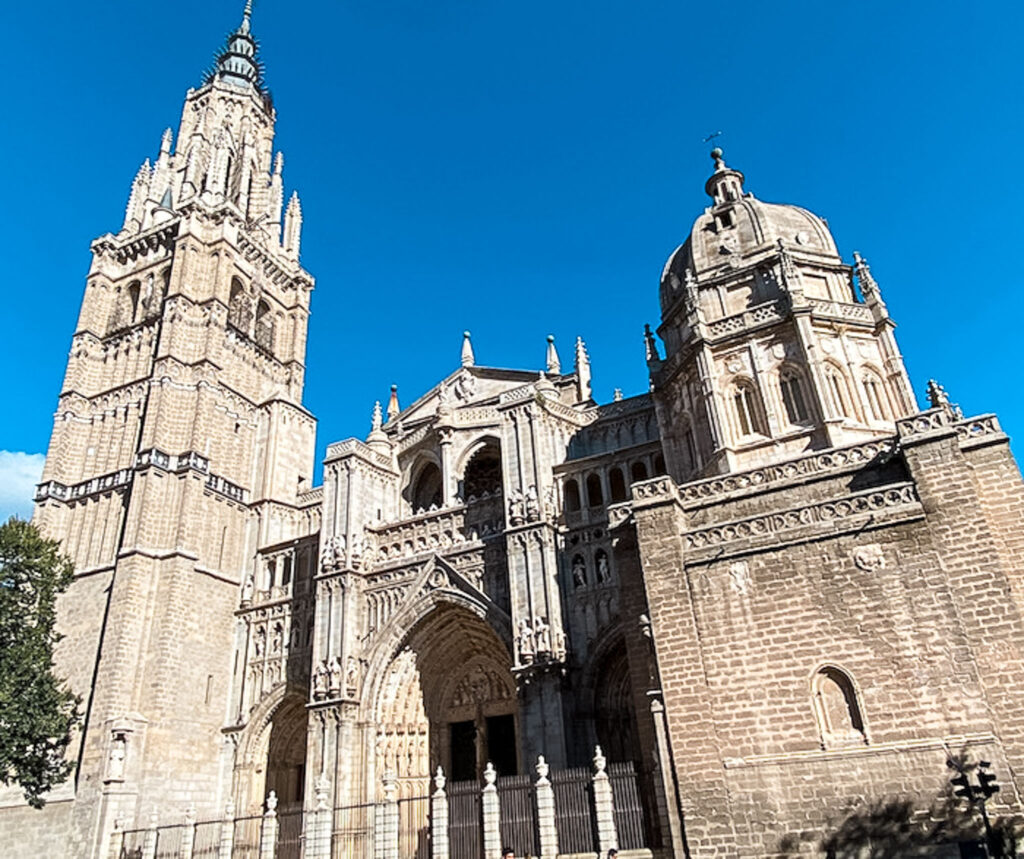
8. Toledo Cathedral
Contributed by Tina of Veganderlust
Toledo Cathedral, or Primatial Cathedral of Saint Mary of Toledo as it’s officially known, is one of the best attractions in Toledo, and it’s just a short train ride away from Madrid.
The cathedral is one of the best examples of Gothic architecture in Spain. It’s one of the three High Gothic Spanish cathedrals from the 13th century.
Even though Toledo Cathedral is a prime example of Gothic architecture, it deviates from the typical style in some aspects. It doesn’t feature two symmetrical towers, and the church has 5 naves. Initially, two symmetrical towers were planned, but during construction, they discovered that the ground on one side wasn’t stable enough for a tower. The decision to build the cathedral over the entire area, which previously housed a mosque, led to the unique layout with five naves.
As fascinating as the exterior of the cathedral is with its asymmetrical towers, don’t miss the chance to marvel at the interior. The Gothic altarpiece features a unique design, with a golden middle section with white and gold tiles surrounding it.
Exploring Toledo Cathedral inside and out should be at the top of your list when planning a day trip from Madrid to Toledo, offering a captivating blend of architectural uniqueness and cultural richness.
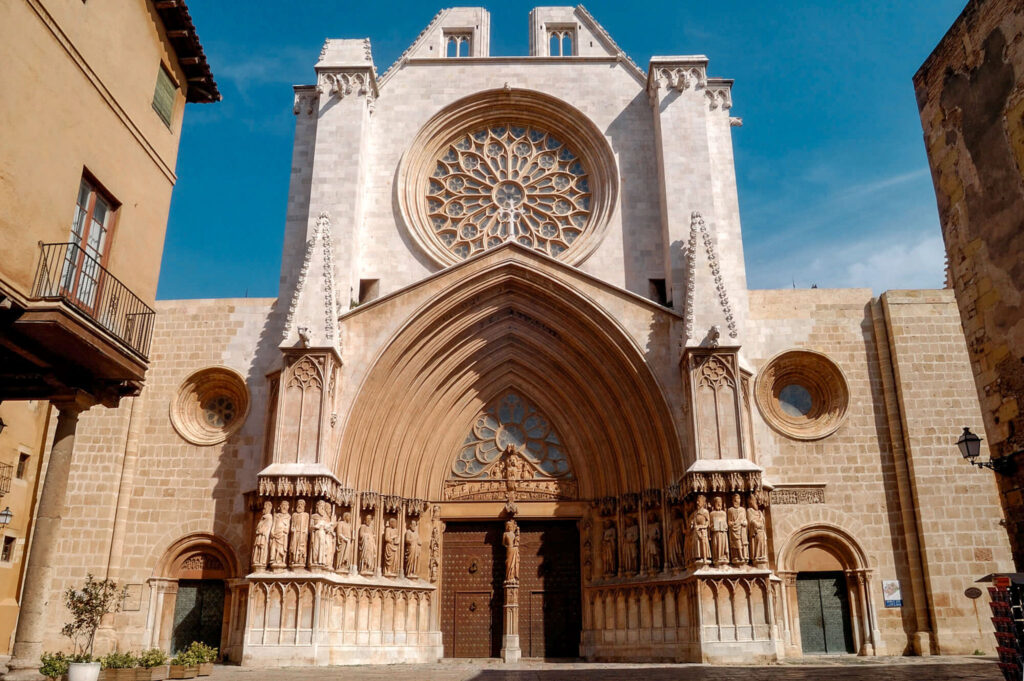
9. Terragona Cathedral
Contributed by Timon of TravelSpain24
If you’re thinking about visiting beach towns near Barcelona for your vacation, you may want to think about a day trip to visit Tarragona and its cathedral. This is one of the most famous cathedrals in Spain and is dedicated to Saint Tecla.
Tarragona Cathedral is built on the site of what was previously a Roman temple dating back to the 1st century. The original temple was built around terraced squares, with an upper square surrounded by a portico. Large portions of this can still be seen in the cathedral cloister. The cathedral is built in the Romanesque style and dates back to the 12th century. It was officially completed in 1331, but the final construction was delayed due to the Black Death.
Visitors are often impressed by the rose window and tall front entrance, which have formed one of the most famous images of the city. You can also find the beautiful Saint Tecla artwork and a museum at the cloister entrance. The cloister features stunning Romanesque statues dating back to the 13th century, and you can also explore historic and modern religious artwork in the museum including stone sculptures, wood carvings, ceramics and goldwork.
It is also well worth planning on spending some time in the Garden of Santa Tecla. This tranquil space is ideal for a relaxing stroll and you can see the 16th-century cross of Tamarit.
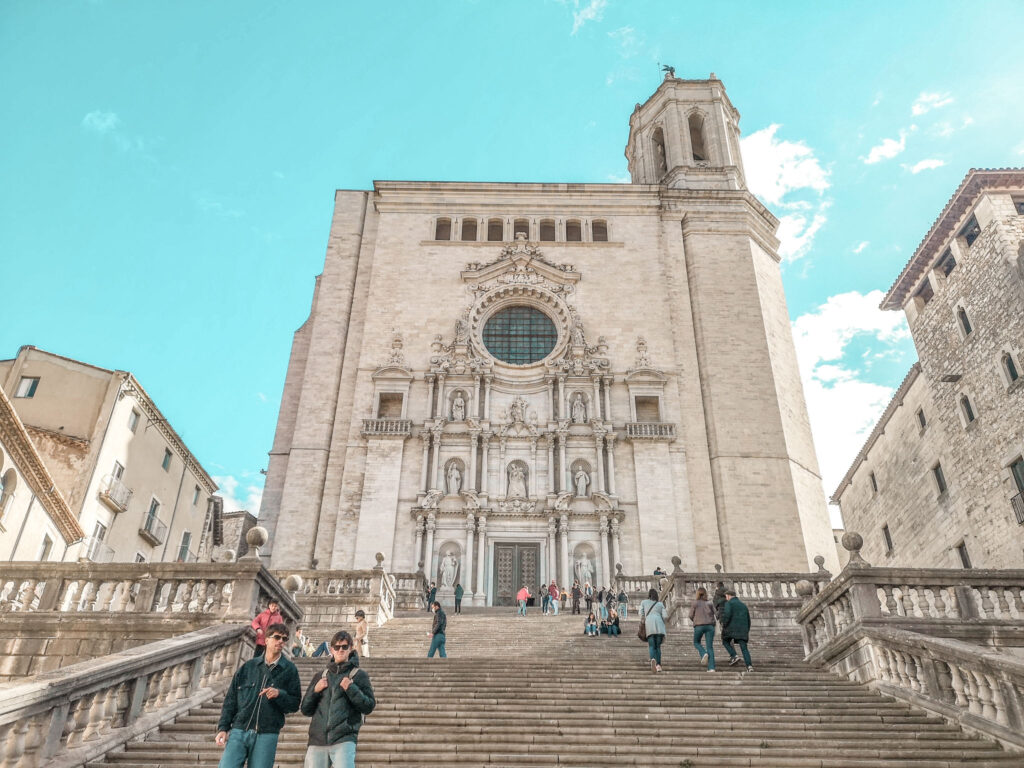
10. Girona Cathedral
Contributed By Vicki from Vicki Viaja
Even though a visit to Girona is nowhere near as popular as a visit to the Catalan capital of Barcelona, many thousands of people worldwide have seen Girona’s Santa Maria Cathedral on television, Namely in the popular HBO series Game of Thrones. During my visit, I just noticed this detail when I discovered the side view of this beautiful cathedral. So make sure to admire the building from different angles as well.
As the highest point in the city, you can hardly miss Girona’s cathedral. In typical Catalan style, the construction of the church took several centuries, which is why, today, the façade and interior combine various architectural styles from different eras.
Architecture enthusiasts are particularly impressed by the central baroque staircase. On the other hand, the interior is characterized by Gothic and Romanesque architectural elements.
If you have some time, be sure to take a walk along the old city wall of Girona. From here, you have a fantastic view over the rooftops of the city to the cathedral.


11. Granada Cathedral
Contributed By Cristina of My Little World of Travelling
One of the many reasons to visit Granada is its historic buildings, one of them is Granada Cathedral, known as Catedral Metropolitana Basílica de Granada in Spanish and also one of the most famous cathedrals in Spain.
This Roman Catholic church is one of Spain’s most important Renaissance buildings. The construction of this cathedral didn’t start until 1518 after the acquisition of the Nasrid kingdom of Granada from the Moors in 1492.
The moment I stepped into the cathedral, I was amazed by its stunning architecture and size. See the impressive perimeter chapels and altars and admire its dome. The latter is one of my favourite parts because of the extraordinary stained-glass windows built with extra attention to detail.
You can spend approximately an hour exploring the different parts of the cathedral while listening to the audio guide.
Next to the cathedral is the Royal Chapel (Capilla Real). It is another important building to visit. It is the burial place of the Catholic Monarchs, Queen Isabella I of Castile and King Ferdinand II of Aragon.
If you plan to visit other historical buildings besides the cathedral, I recommend booking a combined ticket online to save money.
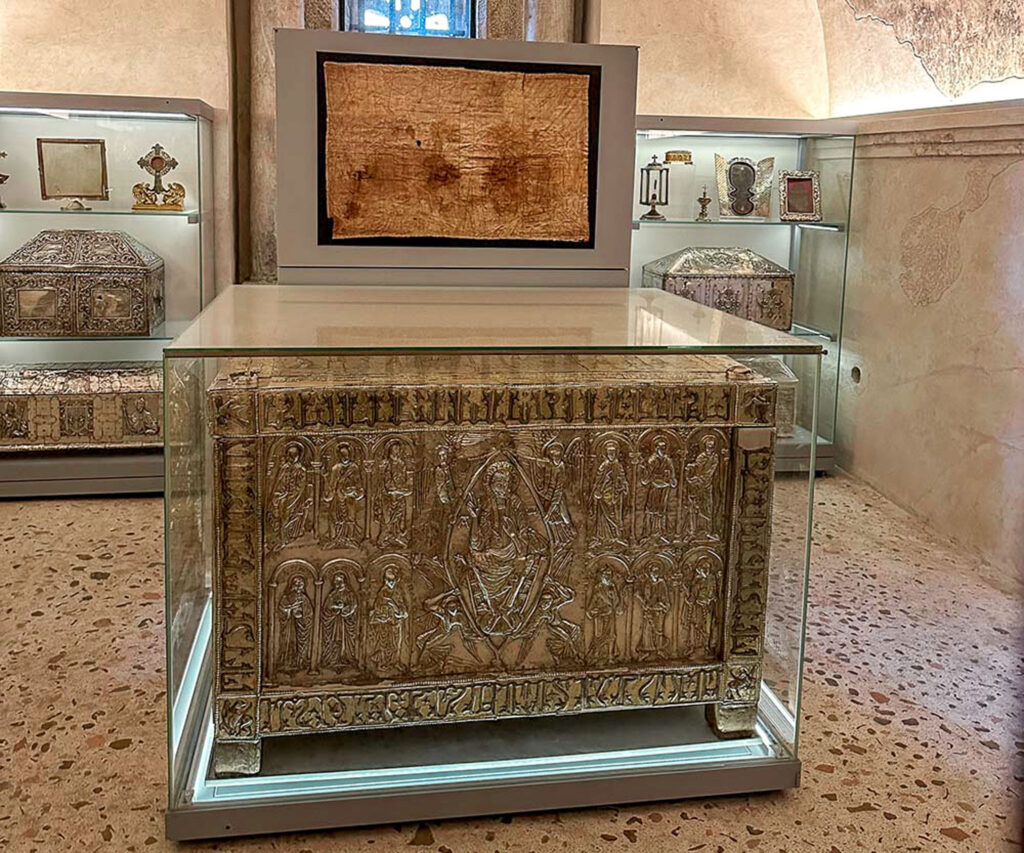
12. Oviedo Cathedral
One of the most famous Cathedrals in Spain is the Oviedo Cathedral (Cathedral of San Salvador). This stunning cathedral has pre-Romanesque origins dating back to the early 9th century. Today, the San Salvador Cathedral showcases numerous architectural styles from Gothic to Baroque.
The Holy Chamber inside the grand cathedral was once a private chapel for King Alfonso II. During the 12th century, the chapel was reconstructed with barrel vault ceilings and the famed sculptures of the twelve Apostles. This chapel is one of many in Oviedo that are included as Monuments of Oviedo and the Kingdom of the Asturias, which are historically important UNESCO World Heritage Sites.
The Holy Chamber houses treasures that came from the Holy Land. The most significant relic is a piece of cloth that is said to be the Holy Shroud.
The San Salvador Cathedral has been an important pilgrimage site since medieval times. The first Camino de Santiago route is said to begin from Oviedo, the Camino Primitivo. However, pilgrims walking the Camino Frances can take the challenging mountainous route of the Camino de San Salvador from León to stand in the presence of the Oviedo Cathedral.
In fact, the famous saying goes “Whoever goes to Santiago and not to the Savior,
visits the servant and forgets the Lord.”
Those travelers looking to experience more pre-Romanesque architecture should visit the two hilltop churches on Oviedo’s Monte Naranco: Santa María del Naranco and San Miguel de Lillo. These two ancient churches are gems of pre-Romanesque art.

13. San Sabastian Cathedral
Contributed by Melissa from Mountains & Mahals
The remarkable 75 meter tall spire of the Good Shepherd of San Sebastián Cathedral (known in Spanish as Catedral del Buen Pastor de San Sebastián) creates an impressive landmark in the center of town. San Sebastián has a couple other famous churches in the old town, but this Neo-Gothic cathedral built in the late 19th century is not to be missed.
It’s worth a stroll both inside and out. You can go inside without paying a fee to admire the incredibly intricate stained glass windows. Outside, the ornate detailed sculptures in the stone work of the facade can be marveled at from the surrounding square during the day or at night when it’s majestically lit up.
Visit a daily mass to hear the beautiful organ, which is the largest in Spain and one of the largest in Europe.
While you’re in San Sebastián, be sure to enjoy the Basque cuisine by tasting pintxos or taking a local cooking class.

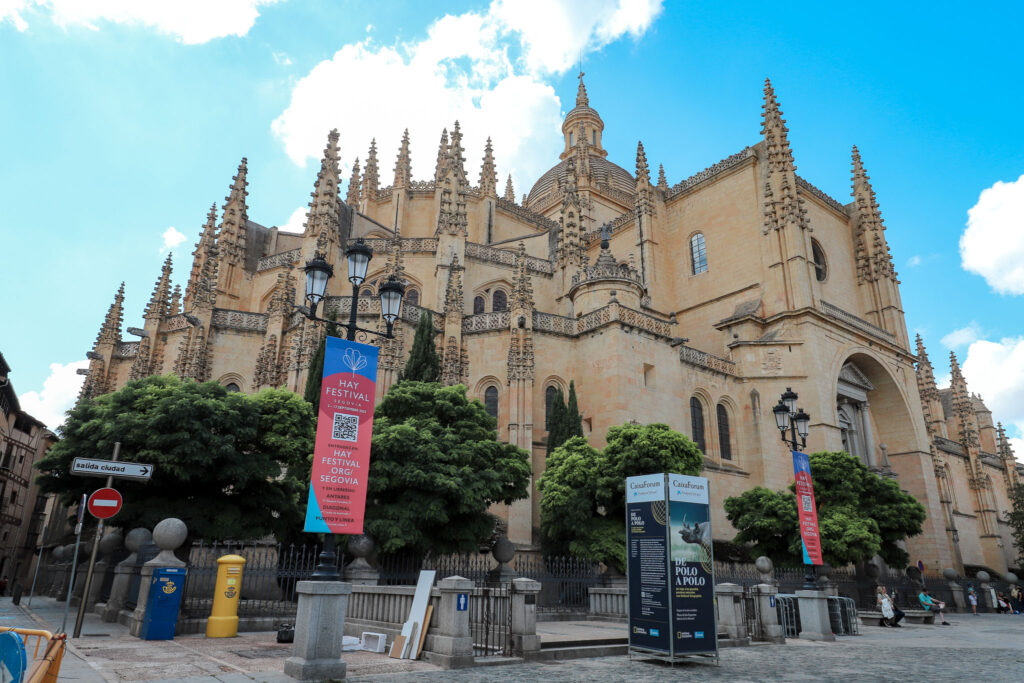
14. Segovia Cathedral
Contributed by Daris from The Discovery Nut
Segovia Cathedral, also known as the Cathedral of Santa María de Segovia is located in Segovia, about 1 hour 15 minutes from Madrid. The Cathedral was built in the Gothic style between the 16th and 18th centuries, with construction completing in 1768.
The cathedral has three main entrances: the Puerta del Perdón, Puerta de San Geroteo, and Puerta de San Frutos. It has a Latin cross plan with three naves and an ambulatory.
One of the most prominent features of the cathedral is its bell tower, also known as the “Dame Tower” (Torre de la Dama), that about 88 meters (289 feet) tall. The tower is worth a visit as it provides the incredible panoramic views of the city and surroundings areas.
The cathedral is home to a rich collection of religious art, including paintings, sculptures, and other decorative elements. Within the cathedral complex, there is also a museum where you can see religious artifacts, artwork, and items related to the history of the cathedral.
The entrance to cathedral costs 3 Euros
After visiting Segovia Cathedral, take a stroll around the city to see its incredible architecture, including the famous aqueduct.
To see the magnificent Segovia cathedral, you can take a bus from Madrid. Buses from Madrid to Segovia depart several times a day from the main bus station and cost about 15 euros per person. Remember that Uber is also a great way to get around Spain – though maybe not distances this far!

15. Salamanca Cathedral
Recommended by Milijana of World Travel Connector
The Cathedral of Salamanca is unique in Spain.
It includes two buildings: the Old Cathedral and the New Cathedral.
The New Cathedral of Salamanca leans onto the northern wall of the Old Cathedral. The Old Cathedral was built from the 12th to the 14th century. But it got small to receive the faithful because of the rise of the population, and the New Cathedral was commissioned in the 15th century. The New Cathedral was built from the 16th to the 18th century.
The Cathedral of Salamanca is among the most beautiful, largest, and tallest Spanish cathedrals. The sandstone from Castile-León was used for building the Cathedral and many other buildings in the Old City of Salamanca. This peculiar sandstone has a gold reflection in the sunshine. Thus, the City of Salamanca is known as the ‘Golden City’ since the city seems to glow in gold. The Old City of Salamanca is a UNESCO World Heritage Site.
The Cathedral of Salamanca is in the heart of the Old City. It is a building of unique beauty. The Cathedral of Salamanca is built in the Late Gothic, Romanesque, Plateresque, and Baroque styles. The New Cathedral is consecrated to the Assumption of the Virgin Mary. There is a stunning carved image of the Assumption of the Virgin Mary from the 17th century inside the Cathedral. There are Renaissance images of the Virgin of Loreto and John the Baptist, among other remarkable art.
The Old Cathedral has beautiful mural paintings, among which the most striking is the image of Christ at the Last Judgment. In addition to its beautiful interior, the relief carvings on the facade of the Cathedral are some of the most intricate in Spain! Trust me, the carvings will take your breath away! Visiting the Cathedral is one of the best things to do in Salamanca, Spain!
Author Bio

This post was written with contributions from amazing travel bloggers working all over the world. It was compiled by Cate.
Cate Michelle previously served as pastor to one of the oldest churches in the United States (founded in 1683) and now writes about religious travel and is a prominent researcher in religion and healthcare. She is currently pursuing a PhD in theology and religious studies in Europe (KU Leuven, Belgium) and splits her time between the US (Philadelphia) and Europe. She’s been obsessed with cathedrals and monasteries since her early 20’s and hopes to see as many of the world’s great spiritual sites as she can in her lifetime.


